

Robotic welding.
Built around your parts.
From the first cut to the final coat. Explore intelligent equipment built around the way you produce.
Precision at every step.
One portfolio. Three essential processes. Explore a focused range of cutting, welding and coating solutions for structural steel.
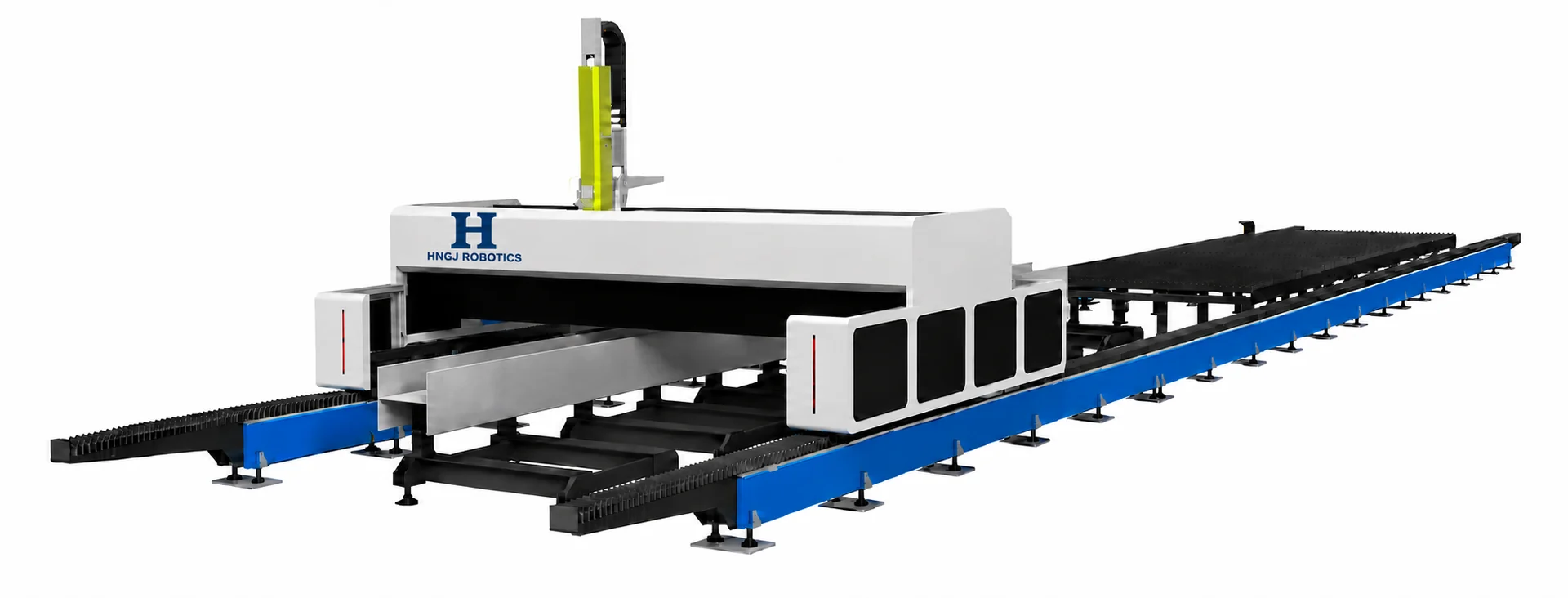
H-beam laser cutting
Dedicated profile processing for structural-steel fabrication.
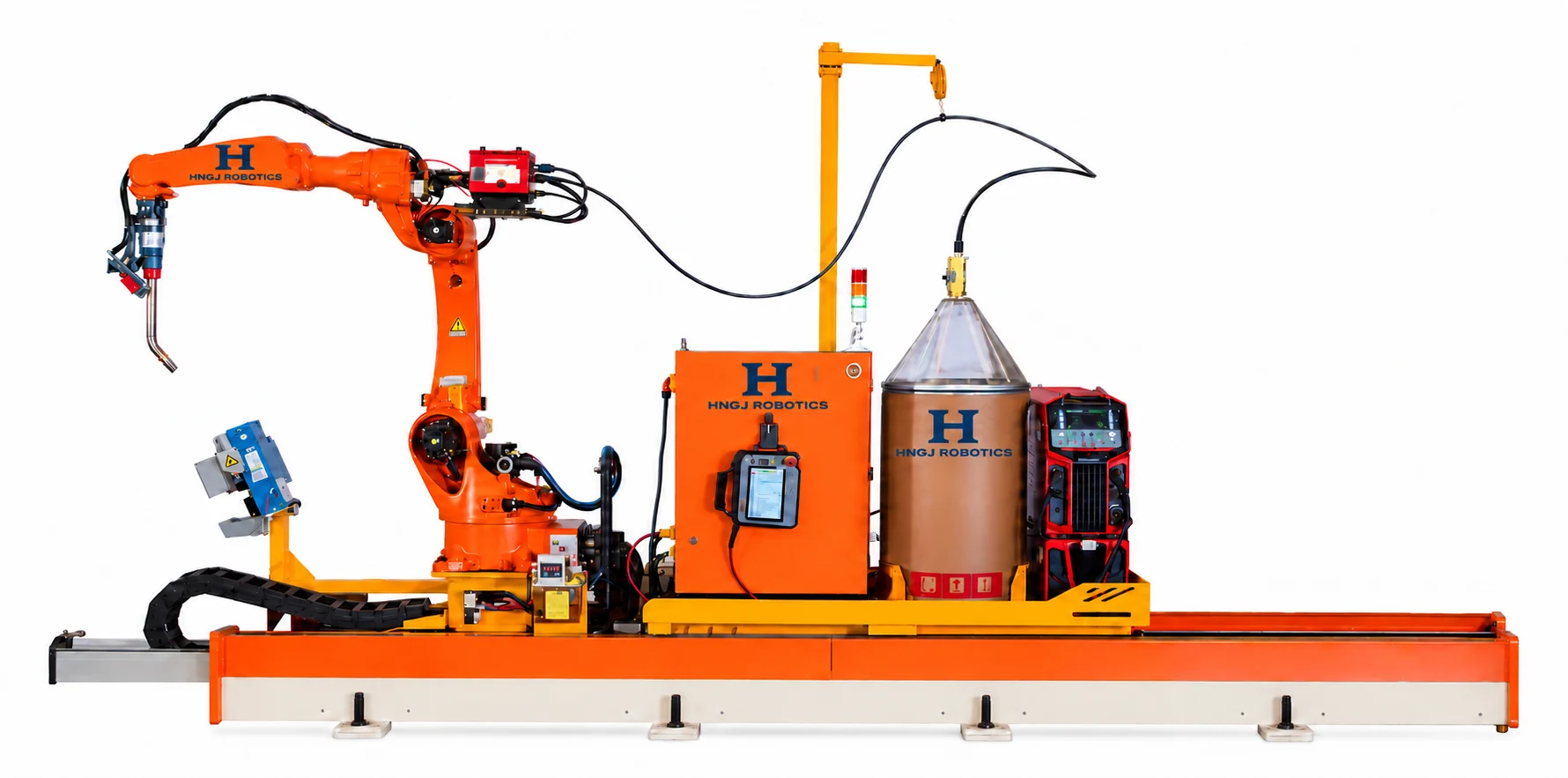
7-axis rail-guided welding
Model-driven or scan-driven welding for open steel structures.
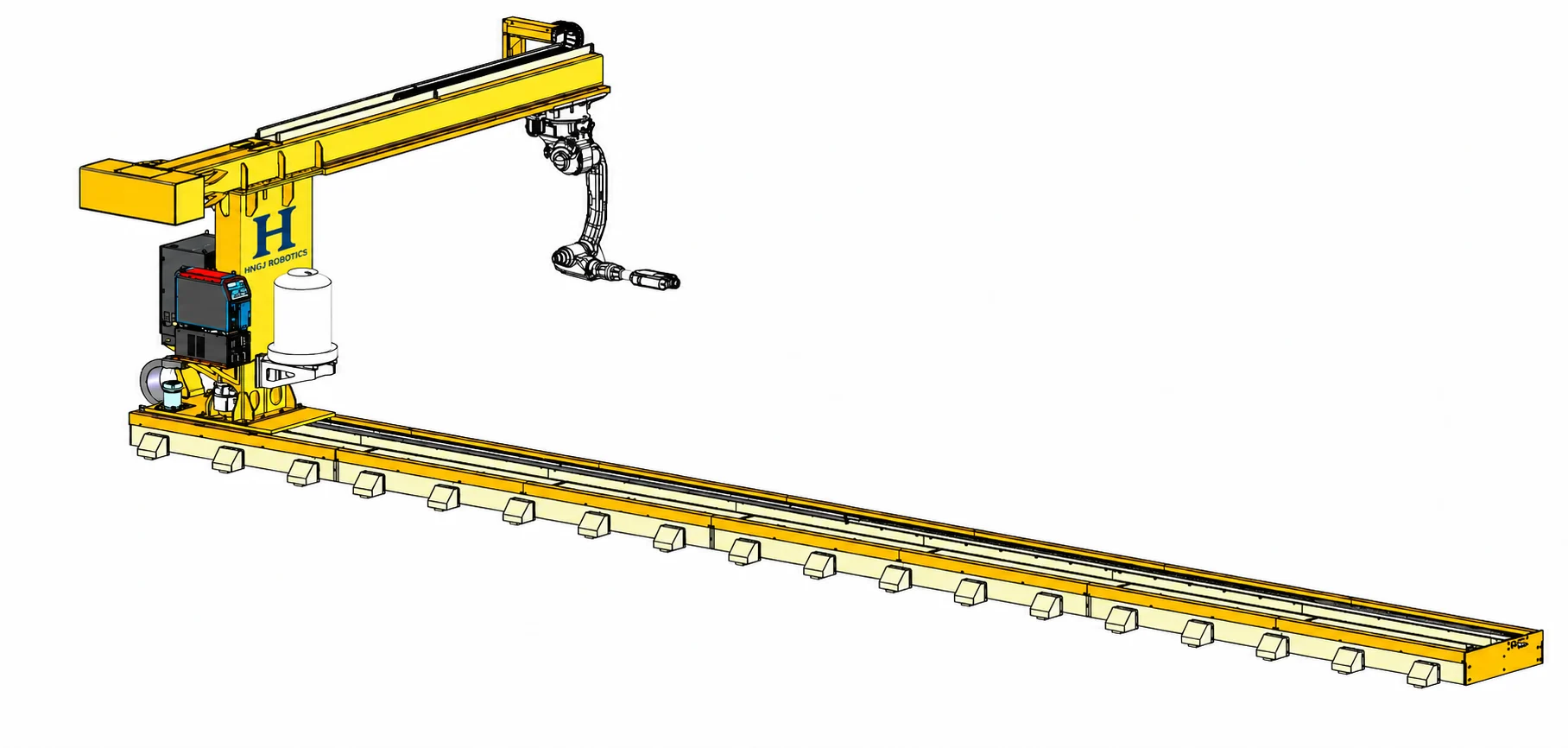
8-axis cantilever welding
A suspended robot and two travel axes for flexible cell layouts.
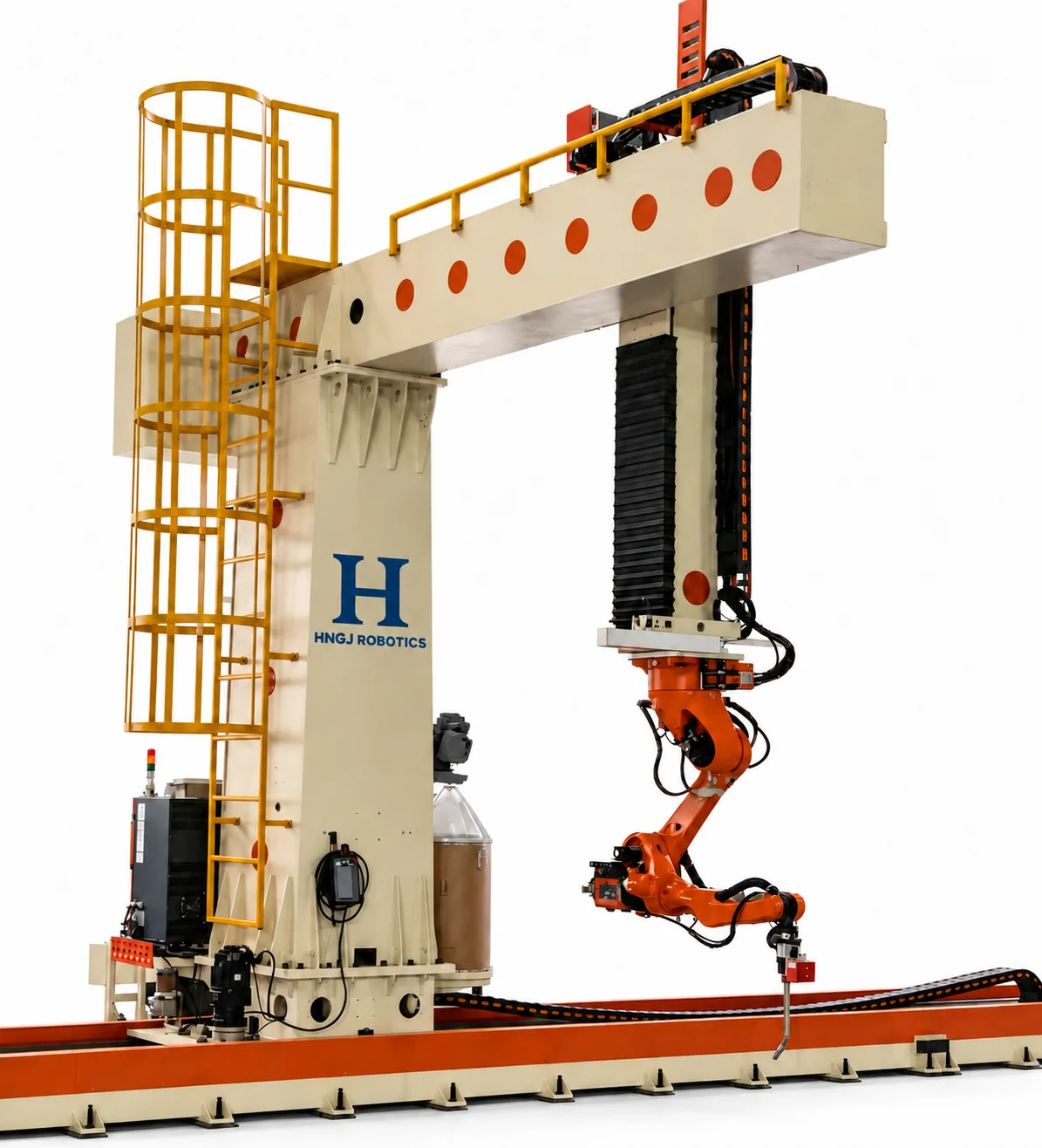
9-axis cantilever welding
Reach further with three external motion axes for larger components.
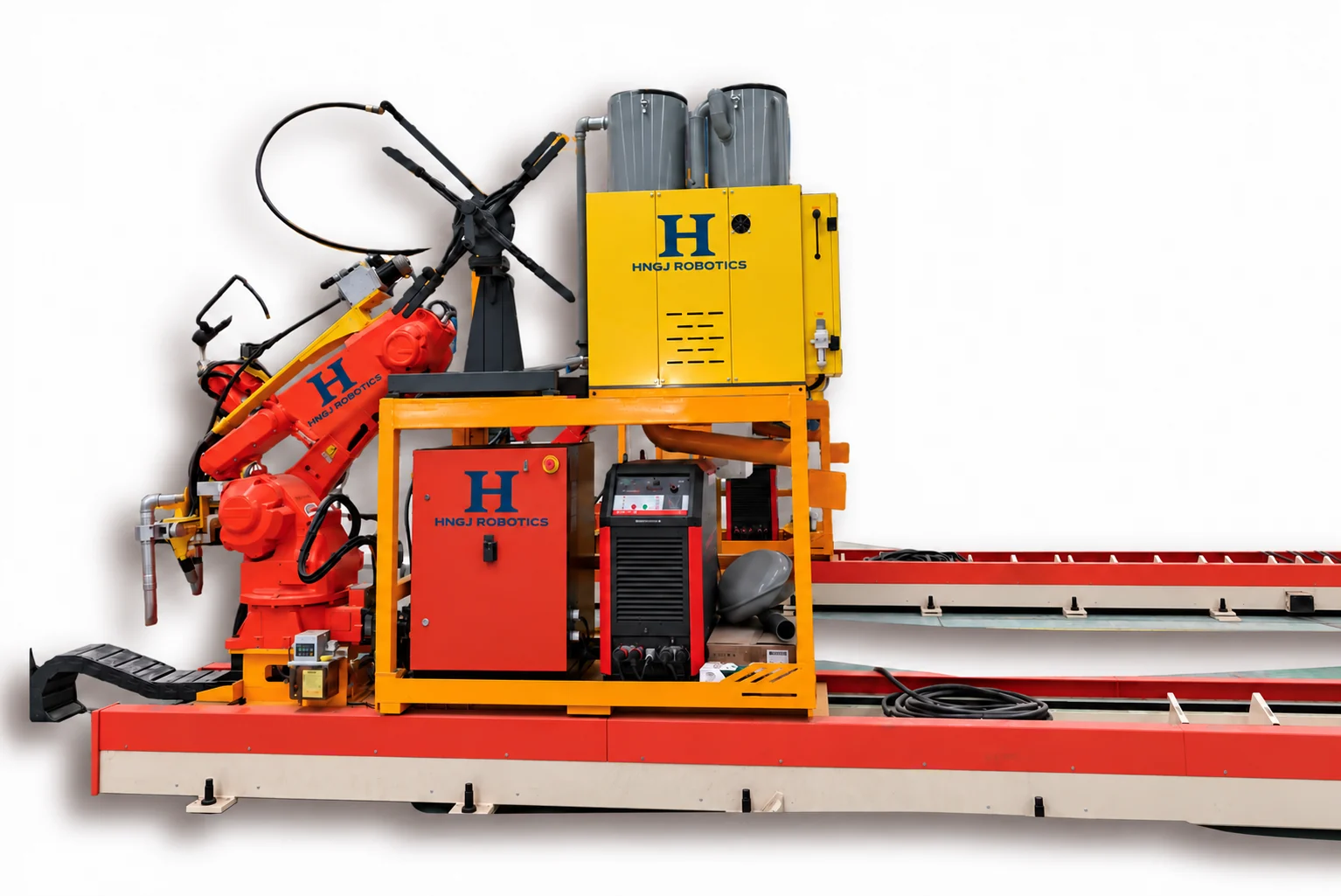
7-axis submerged arc welding
Groove scanning and multipass welding for thick structural steel.
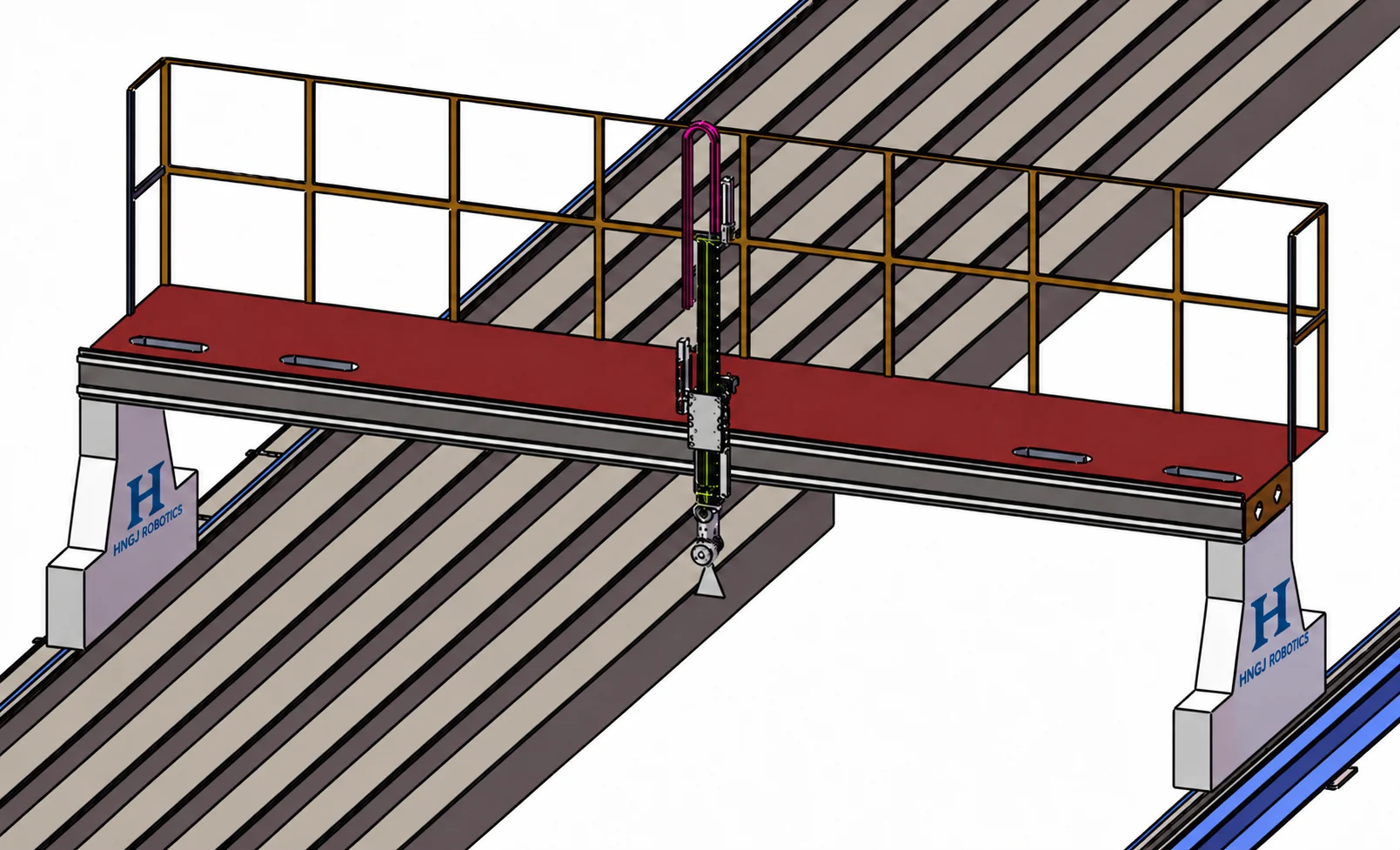
Intelligent robotic coating
From digital component models to automated spraying paths.
Equipment reference · HNGJ GlobalThink beyond
one machine.
Your workpiece is the starting point. Connect material preparation, joint design and surface finishing into a considered equipment plan.
The right fit.
From the start.
Understand the part
Material, dimensions, joints and tolerances define the equipment brief.
Match the process
Compare the working range, access and configuration before choosing a system.
Plan the next step
Bring layout, utilities, operator training and project support into the discussion.
Your next step starts with a conversation.
Tell us what you make. Let’s define the right equipment configuration.
Practical equipment guides
Choosing a 7-, 8- or 9-axis welding workstation
Start with the component and the welds. Axis count describes motion; it does not by itself establish weld quality, output or suitability.
Read guide →02 / SELECTION GUIDEReviewing H-beams, box columns and stiffeners for robotic welding
Different component geometries need different access and assembly plans. Use the following checks before selecting a workstation.
Read guide →03 / SELECTION GUIDEPlanning workshop space for a welding workstation
The machine footprint is only one part of the layout. Plan the full working area and the way components move through it.
Read guide →