
Local welds on large fixed steel assemblies.
MOBILE · GMAW
Compact mobile welding
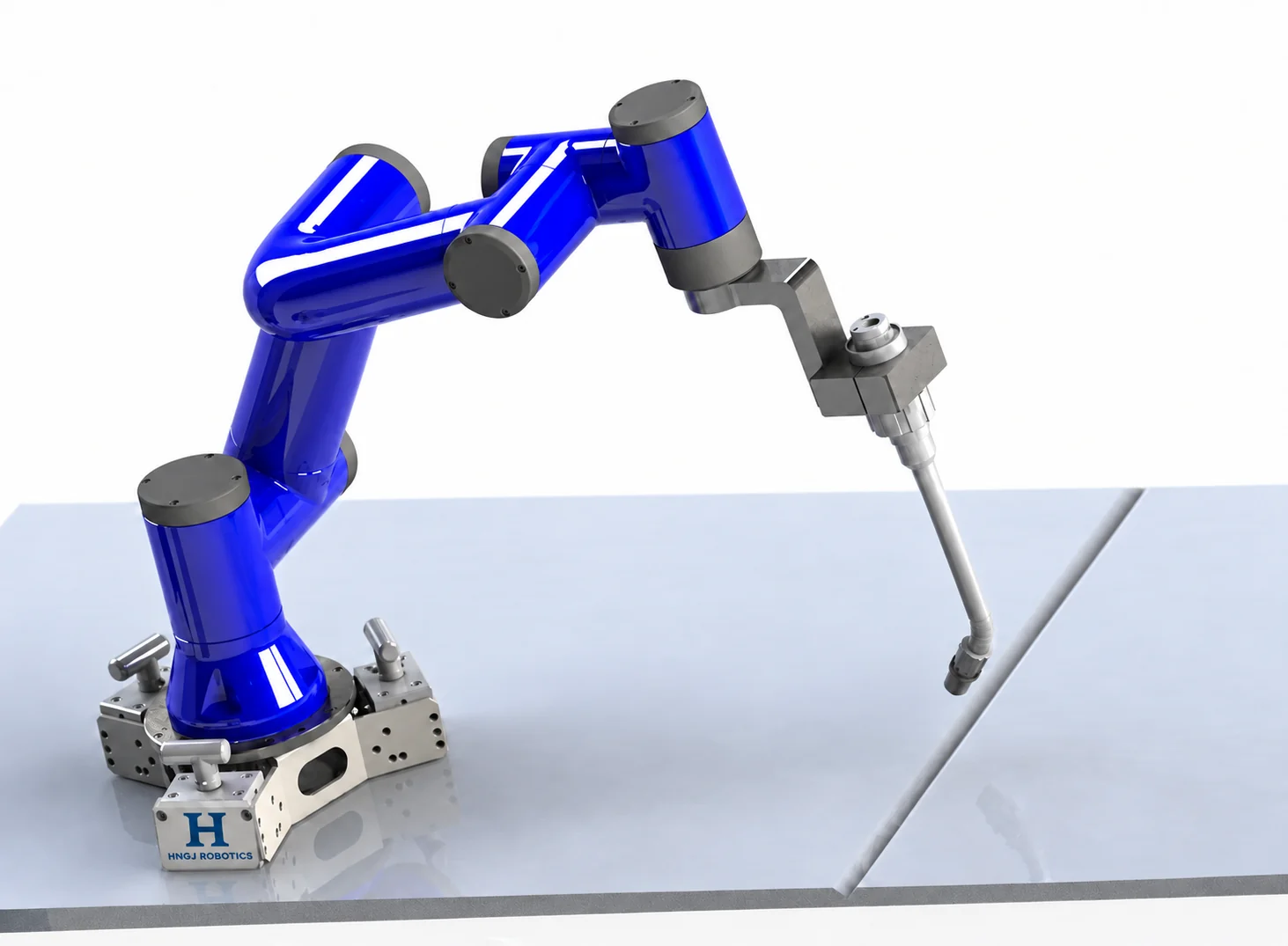
A compact six-axis welding system for large fixed structures, small batches and restricted spaces. Position the robot on the workpiece, guide the path and reuse saved process settings.
Robotic welding≤23 kg arm + magnetic base
Enquire about this equipment01 / PRODUCT OVERVIEW
How this equipment works.
A compact six-axis robot brings mechanized welding to parts that are difficult to move into a fixed cell. The arm and magnetic base together weigh no more than 23 kg in the reference configuration; this figure does not include the complete welding system.
Position the unit using the approved mounting method, guide it through a path and select the welding process. Upright, side and inverted arrangements are available when installation conditions permit. Straight, curved, wrap-around and intermittent paths support varied small-batch tasks.
Find the fit for your parts.
Small-batch brackets, stiffeners and accessible corner joints.
Short seams in restricted work areas, subject to mounting and reach checks.
Before choosing a configuration
Check magnetic-base contact, surface condition, supported mounting orientation, cable routing and the 622 mm robot reach. Reposition the robot when the job exceeds its local working area.
03 / PROCESS & CONFIGURATION
Designed for the task.
- Upright, side-mounted and inverted installation options.
- Permanent magnetic base; vacuum mounting is optional.
- Drag-to-teach operation without code programming.
- Supports straight, curved, wraparound and intermittent weld paths.
TECHNICAL OVERVIEW
Key specifications
| Arm + magnetic base mass | ≤23 kg |
|---|---|
| Complete equipment mass | ≤200 kg |
| Configured effective reach | 622 mm |
| Repeatability | ±0.05 mm |
| Power-source options | 350 / 500 A |
| Single weld length | Approx. 1.2 m maximum |
Configuration reference: HNGJ Global. Parameters apply to the referenced configuration. Final scope is confirmed in the technical agreement. Robot-only figures are identified separately.
A useful brief gets a clearer proposal.
Send material grade and thickness, maximum part dimensions and weight, joint or cutting details, batch size, target output and the installation country. Describe the current process and the bottleneck you want to resolve.
04 / AFTER-SALES SUPPORT
Support throughout operation.
Build a service plan around your equipment, operators and installation location. The following items can be included in the agreed project scope.
Installation & commissioning
Agree checks for the robot installation, external axes where fitted, fixtures, power, gas and extraction. Commissioning reviews coordinate references and sample welds against the agreed process.
Operator training
Training can include job preparation, the supported programming or scanning method, process selection, weld inspection and routine restart procedures.
Care & maintenance
Training can cover magnetic mounting checks, drag-to-teach operation, process recall and torch care. Software maintenance, remote assistance and update arrangements should be confirmed for the supplied configuration.
Troubleshooting & spare parts
Share the equipment model, fault code, operating conditions and relevant photos when requesting support. Diagnosis, replacement parts and any on-site visit are coordinated for the installed configuration and project location.
Warranty & service arrangements
The reference proposal states a one-year warranty excluding wear parts. Paid maintenance after warranty and any remote support are defined in the project agreement; overseas arrangements require confirmation.
Related equipment
Robotic welding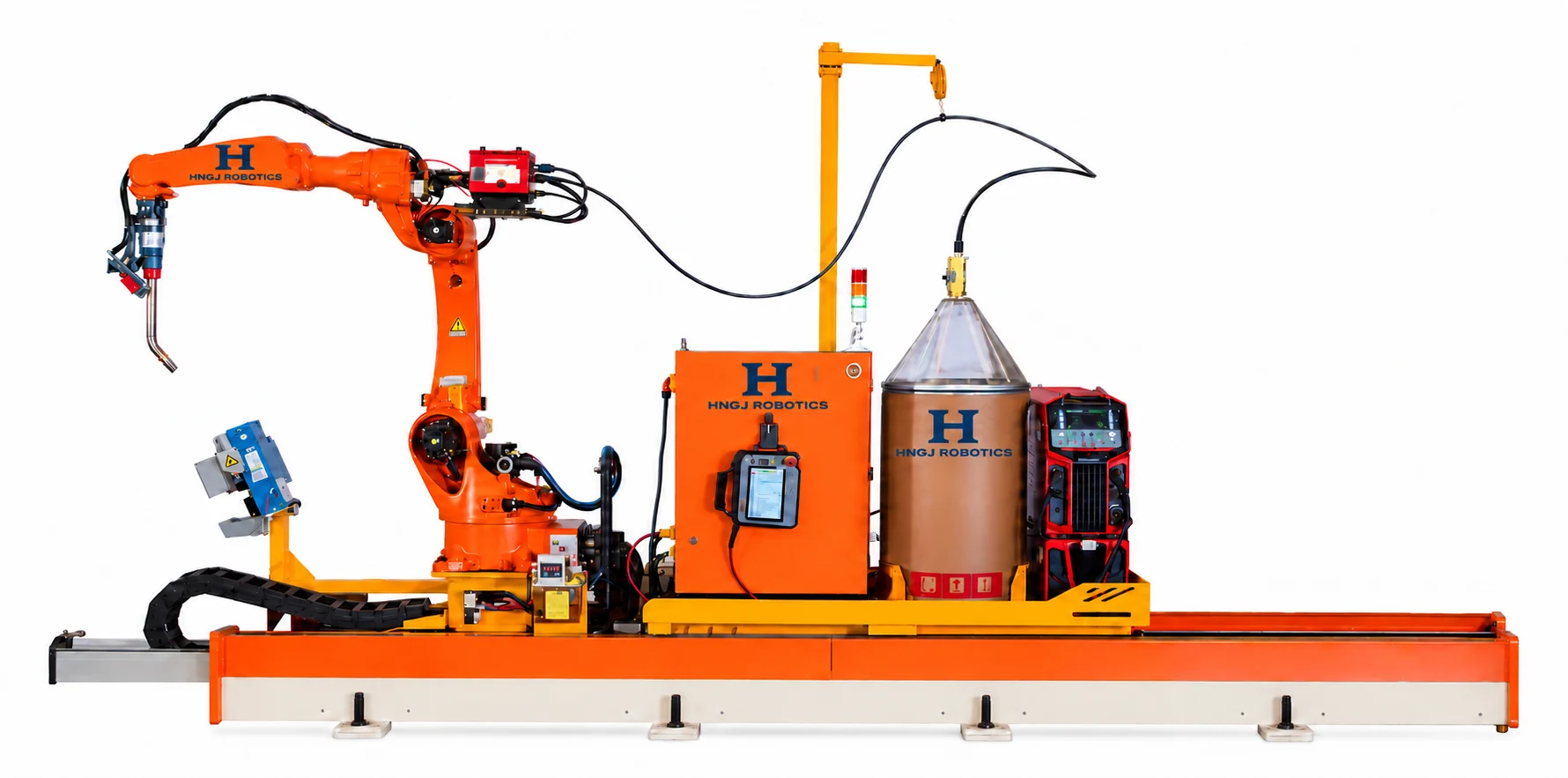
7-axis rail-guided welding
Model-driven or scan-driven welding for open steel structures.
Robotic welding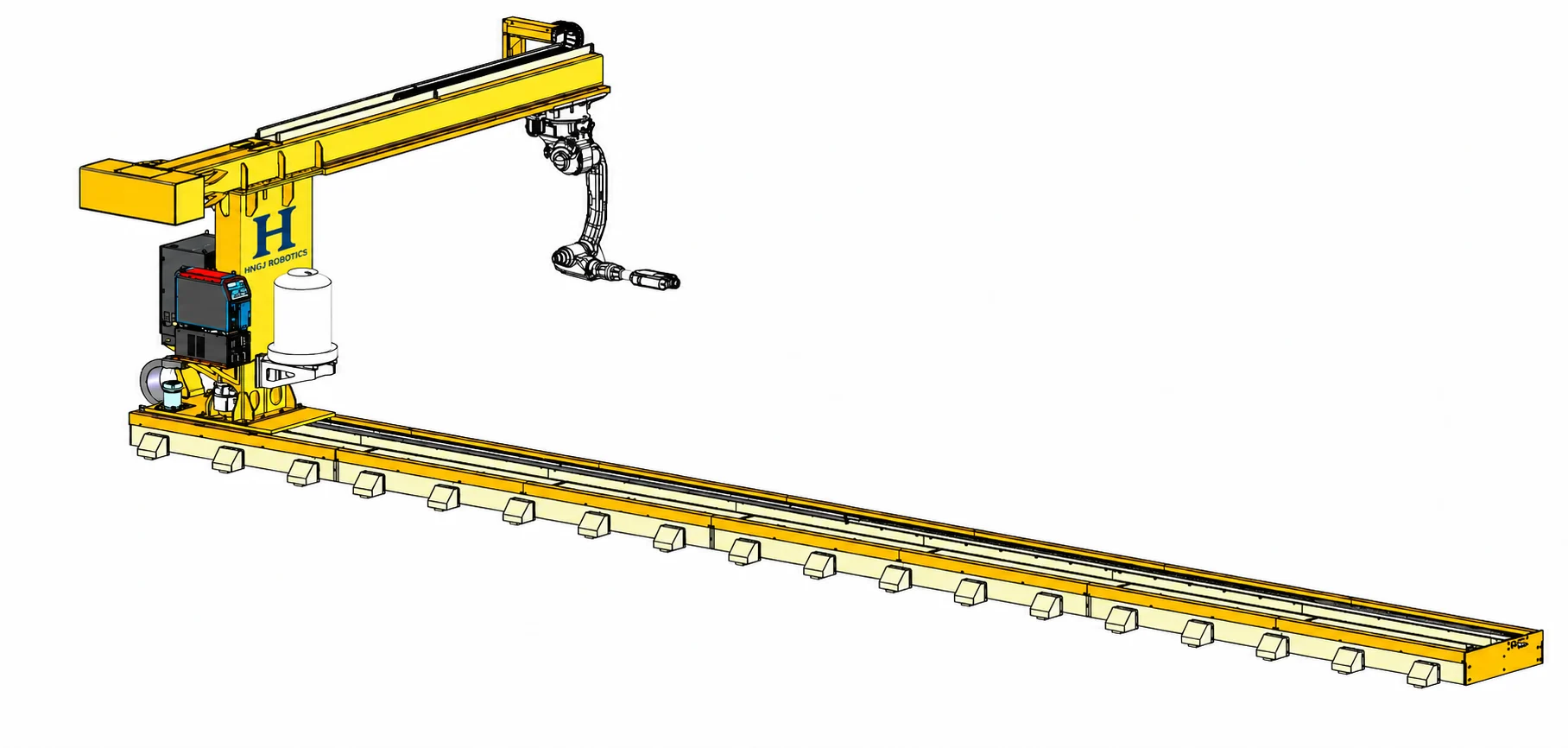
8-axis cantilever welding
A suspended robot and two travel axes for flexible cell layouts.
Robotic welding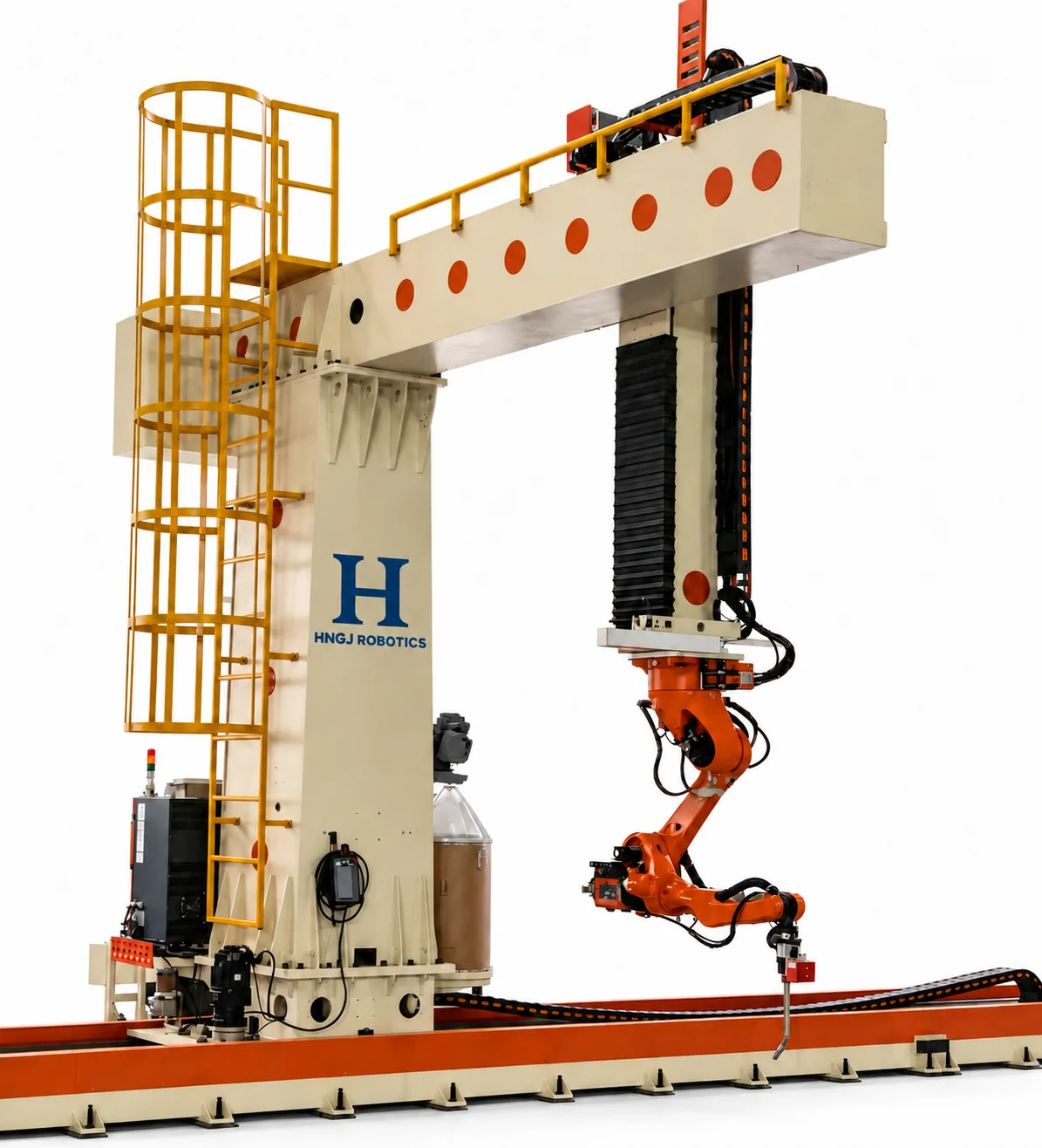
9-axis cantilever welding
Reach further with three external motion axes for larger components.
Your next step starts with a conversation.
Tell us what you make. Let’s define the right equipment configuration.